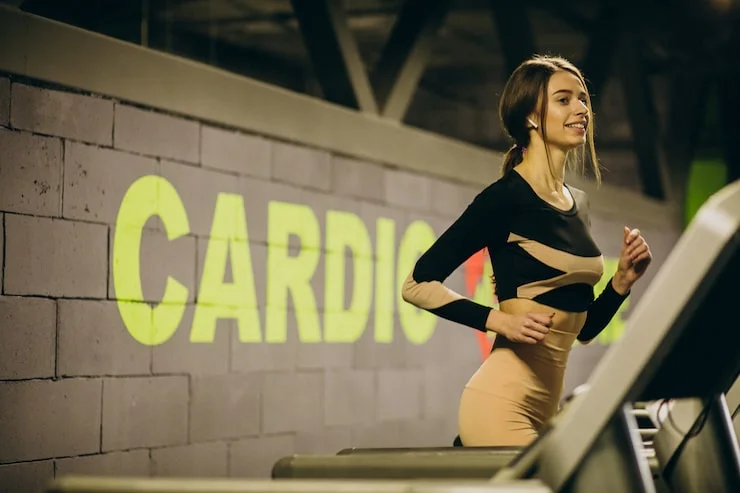
Most people who want to start exercising quit within the first few weeks. The reason is rarely laziness. It is usually pain. High-impact workouts like running or jumping feel too hard on the knees, hips, and back, especially when your body is not used to moving that low impact cardio workout for beginners.
Low impact cardio solves this problem. It raises your heart rate and strengthens your heart without pounding your joints. You can do it at home, in your living room, wearing whatever you already have on. This guide gives you a complete beginner plan, from your first warm-up to a full weekly schedule you can actually stick to.
What Low Impact Cardio Really Means?
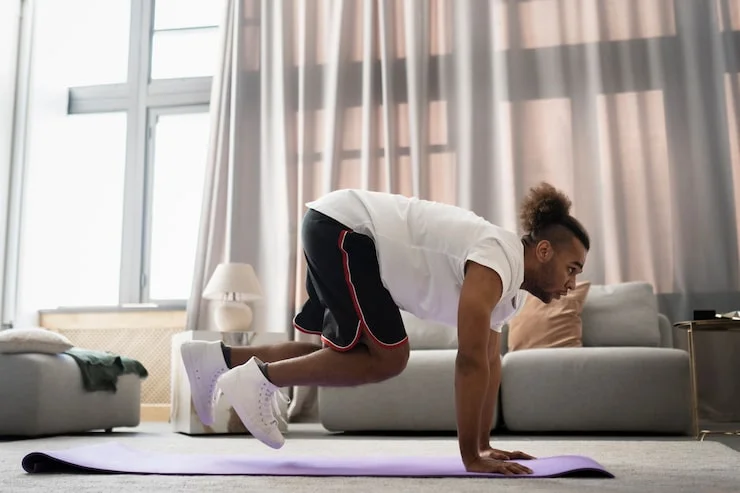
Low impact does not mean low effort. It means one foot stays on the ground at all times, or the movement does not involve jumping and landing. Your joints do not absorb a hard force. Your heart still works hard.
A cardiologist at NewYork-Presbyterian explains that low-impact exercise raises your heart rate in a comfortable setting, and it opens exercise to everyone because you do not need special equipment or even a change of clothes . That matters for beginners. The easier it is to start, the more likely you are to keep going.
The American Heart Association recommends at least 150 minutes of moderate aerobic activity each week for adults . Low impact cardio counts toward that goal just as much as running does. The only real difference is what your joints have to handle.
You May Also Like: Best Workout to Burn Calories: Top High-Efficiency Exercises
Why Beginners Should Start Here?
Your body needs time to adapt. Ligaments and tendons do not strengthen as quickly as muscles do. Jumping into high-impact exercise too soon is a common reason people get hurt and stop.
Low impact work gives you a way to build the habit first. You learn how to breathe, how to pace yourself, and how to listen to your body. A physiotherapist quoted by The Body Coach puts it simply: for entry-level people, low impact is powerful both emotionally and physically . You finish a session feeling capable instead of wrecked.
There is another benefit that does not get talked about enough. Low impact cardio doubles as self-care time. If you can create an environment you look forward to, the benefits go beyond your heart and muscles . You might march in place while watching a show, or do side steps while listening to music. The movement becomes something you want to do, not something you dread.
Your First Workout: Three Simple Moves
You do not need a gym. You do not need a mat, though a soft surface helps. Start with three basic movements that cover your whole body and get your heart pumping.
Marching in Place. Stand with your feet hip-width apart. Lift one knee to a comfortable height, then set it down. Lift the other knee. Swing your arms naturally. Keep your posture tall. Do not look down at your feet. This move warms up your hips and gets blood flowing without any impact.
Side Steps. Bend your knees slightly, as if you are about to sit in a chair. Step to the right with your right foot, then bring your left foot to meet it. Step to the left, then bring your right foot to meet it. Stay low the whole time. Your thighs will feel this after a few minutes. Keep your hands on your hips or swing them gently.
Heel Taps. Stand tall with your hands on your hips. Extend your right leg forward and tap your heel on the floor. Bring it back. Do the same with your left leg. Alternate sides. This opens up your hips and works your legs without any strain on your knees .
Do each move for 30 seconds. Rest for 30 seconds between moves. Repeat the whole circuit two or three times. That is your first workout. It takes about ten minutes.
If you want to sit instead of stand, you can do all three moves from a chair. Arm and leg extensions, elbow extensions with knee lifts, and seated star jacks are gentle options that still raise your heart rate .
The Warm-Up You Should Never Skip
A warm-up is not optional. It slowly raises your body temperature and increases blood flow to your muscles. The Mayo Clinic notes that warming up may help lower muscle soreness and lessen injury risk .
For low impact cardio, your warm-up is simple. Do the same movements you plan to do in your workout, but at a slower pace and lower intensity. March in place for two minutes before you start the circuit. Do a few gentle side steps. Circle your arms. That is enough. You should feel slightly warmer but not tired .
Do not stretch before you workout. Save stretching for after. Your muscles are cold before exercise, and stretching a cold muscle is not helpful. Move first, stretch later.
The Cool-Down and Why It Matters
When you stop moving suddenly, your heart rate and blood pressure can drop too fast. A cool-down lets your body ease out of exercise the same way it eased in.
After your last circuit, walk in place slowly for three to five minutes. Let your breathing return to normal. Then do a few gentle stretches. Reach your arms overhead. Bend forward and let your arms hang. Hold each stretch for fifteen to twenty seconds. Do not bounce.
The Mayo Clinic points out that cooling down helps your heart rate and blood pressure slowly recover to pre-exercise levels . It is a small habit that makes your workout feel complete and helps your body transition back to the rest of your day.
How Often and How Long?
The British Heart Foundation recommends doing low-intensity exercises at least two to three times a week when you are starting . That is a realistic target. Three sessions of ten to fifteen minutes each is a solid first week.
Do not worry about duration at first. Focus on showing up. A ten-minute session you actually do is worth more than a thirty-minute session you keep postponing. As the movements feel easier, add a few minutes. When you can do fifteen minutes comfortably, try twenty.
A simple weekly plan looks like this: do your circuit on Monday, Wednesday, and Friday. On the days between, take a short walk or do some gentle stretching. Rest is part of the plan, not a failure of it. Your muscles need time to recover and adapt.
The American Heart Association's 150-minute weekly goal is a destination, not a starting line . You can build toward it over weeks and months. There is no rush.
You May Also Like: Low-impact exercises for overweight beginners
How to Know You Are Working at the Right Effort?
You do not need a heart rate monitor. You need a simple test: can you talk?
During moderate-intensity low impact cardio, you should be able to hold a conversation. You might be slightly breathless, but you are not gasping. A cardiologist describes this as Zone 2 exercise, where you can easily hold a conversation . If you cannot speak a full sentence without stopping for air, slow down.
This test works because it is personal. What feels moderate for you might feel easy for someone else. That is fine. Your body is the only reference point that matters.
As you get fitter, the same movements will feel easier. That is your signal to add a little more. You can march with higher knees. You can step wider. You can add arm movements. You can shorten your rest periods. Small changes add up.
Common Mistakes to Avoid
The most common mistake beginners make is starting too hard. It feels good to push, and then the next day you are sore and discouraged. Start easier than you think you need to. You should finish your workout feeling like you could have done a little more. That is the right low impact cardio workout for beginners.
Another mistake is skipping the warm-up and cool-down because they feel like extra time. They are not extra. They are part of the workout. Five minutes of preparation and five minutes of recovery protect the fifteen minutes of work you just did.
A third mistake is comparing yourself to people online. The videos you see are edited. The people in them have been practicing. Your only job is to move your body today, in whatever way feels safe and manageable for you.
When to Check With a Doctor?
Low impact cardio is gentle, but you should still talk to your doctor before starting if you have a heart condition, high blood pressure, diabetes, or joint problems that limit your movement . This is not meant to scare you. It is meant to keep you safe.
If you feel chest pain, dizziness, or unusual shortness of breath during exercise, stop immediately and seek medical attention. Pushing through those signals is never the right choice.
For most healthy beginners, low impact cardio is safe and beneficial. The key is listening to your body and progressing at a pace that feels sustainable.
Conclusion
You do not need to be fit to start. You start to become fit. Low impact cardio gives you a way to begin that respects your joints and meets you where you are. Three simple moves. A warm-up. A cool-down. Three days a week. That is enough to build a foundation.
The people who succeed at exercise are not the ones who go hardest on day one. They are the ones who come back on day two. Choose the version of movement you can return to, again and again, until it becomes part of your life.