You know the drill. "Eat less. Move more." Great. Thanks. If that worked, every diet ad on Instagram would be out of business. Calorie deficit strategies are the real engine. No deficit? No fat loss. Full stop. But here is where 90% of people torch their metabolism instead of their belly fat. They crash too hard. They eat like a bird. Then they binge like a bear before hibernation. We are not doing that here.
I am going to show you the ugly, beautiful, frustrating, and totally doable way to create a calorie deficit that actually feels sustainable. We are talking calorie deficit strategies for weight loss that survive pizza night. Calorie deficit strategies for beginners who think "macros" is a type of beer. And yeah, we will even look at calorie deficit strategies for women because hormones are real and they are not an excuse—they are a variable you need to play.
What Actually Happens Inside Your Body?

A deficit is not a diet. It is thermodynamics. You put less energy in than your body burns. Your body then says, "Welp, time to eat the fridge. "Except the fridge is your love handles." Simple math. Brutal execution. Most people get the math right but the psychology wrong.
That "Set Point" Theory? Mostly Garbage
There is a myth. You hear it all the time. "My body just wants to be this weight." Bull. Your body has a comfort zone, not a jail sentence. You can move the needle. But you have to stop shocking the system.
Real-world scenario: A client we will call "Mike." He used a generic calorie deficit calculator. Told him 1,500 calories. He is 6'2" and works construction. He lost 8 lbs in 10 days. Felt amazing. Then he couldn't poop. Then he couldn't sleep. Then he ate an entire large pizza at 11 PM. The calculator didn't know he carried drywall upstairs. His real maintenance? 3,200 calories. He was basically starving.
Hot take (and people hate this): A 300-calorie deficit beats a 1,000-calorie deficit every single time for real humans. Why? Because cortisol. Stress hormones spike when you starve. Then your body holds water. Then the scale lies. Then you quit. Slow is fast. Repeat that.
Under-the-hood geek stuff: Your TDEE has four parts. BMR (what you burn if you go into a coma). NEAT (walking, fidgeting, standing). TEF (digesting food). EAT (exercise). Most people on a deficit accidentally destroy NEAT. They sit more. They fidget less. They take the elevator. That's your secret weapon. Walk more. Park far away. Pace while on the phone. It adds 200-300 calories burned daily. For free.
You may also read :- Workout And Diet Plan For Weight Loss For Male
How Do I Successfully Do a Calorie Deficit?
You want the answer to "How do I successfully do a calorie deficit?" Here it is. Stop guessing. Stop "eyeballing" peanut butter. Peanut butter is a liar. One "tablespoon" from a jar is usually three. Run an experiment on your own body. Like a scientist. But a lazy scientist who hates spreadsheets.
Step One—Throw Away "Clean Eating"
"Clean eating" is marketing garbage. You can get fat eating brown rice and chicken breast if you eat six pounds of it. You can lose weight eating McDonald's if you track it. (Look up the professor who lost 27 lbs on Twinkies. I am serious. Google it.)
We are not advocating junk. We are advocating accuracy.
The actual protocol (do this):
- Use a calorie deficit calculator to find your estimated maintenance. Write it down.
- Subtract 300. Not 500. Not 1,000. Three zero zero.
- Buy a food scale. Yes, a scale. Not cups. Cups are for baking cookies, not tracking body fat.
- Eat that number for 14 days. Weigh yourself every morning after you pee. Average the week.
Counter-intuitive truth that will piss you off: You might need to eat more to lose weight. I know. It sounds like a scam. But if you eat below your BMR (the coma number), your thyroid says "nope." T3 hormone drops. You feel like a zombie. Your hair gets thin. Adding 200 calories of lean protein often restarts the fat loss. Try it before you argue.
Calorie Deficit Strategies for Weight Loss

We need calorie deficit strategies for weight loss that do not make you hate Sunday meal prep. Most people sprint. Then they vomit. Then they quit. We are walking. Briskly. With good music.
Nutrient Partitioning—The Fancy Term for "Where Does This Calorie Go?"
Two people. Same calories. Same deficit. Person A eats 150 g protein, 200 g carbs, and 50 g fat. Person B eats 80 g protein, 250 g carbs, and 70 g fat. Person A loses more fat. Why? Because protein costs more to digest. It is the only macro with a 20-30% thermic effect. Eat 100 calories of protein? Your body burns 20-30 of them just breaking it down. Carbs? 5-10%. Fat? 0-3%.
Real-world scenario—a study you should care about: Two groups are in a deficit. Same calories. The high-protein group lost 1.5x more fat and kept 2x more muscle. Muscle is your metabolic bank account. Lose muscle? Your maintenance drops. Then you regain fat faster. Then you hate everything.
Actionable list for the long haul (no fluff):
- Protein first: 0.8 to 1 g per pound of body weight. Yes, that much. No, you will not get kidney stones unless you already have kidney disease.
- Carb cycle like a normal person: More carbs on days you lift. Fewer carbs on days you sit on your butt.
- Fat is not the devil: Drop below 0.3 g of fat per pound, and your testosterone/estrogen tanks. Then you are tired, sad, and hungry. Keep fats in.
- Refeed days: Every 10-14 days, eat at maintenance. Not above. At maintenance. This refills leptin (the "I am full" hormone). Stops the metabolic slowdown cold.
Calorie Deficit Strategies for Beginners
Are you new here? The word "macro" sounds like a coffee size. I get it. Calorie deficit strategies for beginners need to be stupid simple. Like, "my grandma could do this" simple.
The Half-Plate Hack (No Math Required)
Do not weigh your food on day one. You will quit by day three.
Three rules. That is it.
- Every meal? Half the plate is non-starchy vegetables. Broccoli. Spinach. Zucchini. Peppers.
- The other half? Split between lean protein (chicken, fish, tofu) and a fist-sized pile of carbs (rice, potato, quinoa).
- Drink 16 oz of water 10 minutes before you eat. Thirst feels identical to hunger. Your brain is stupid that way.
Why this works: You automatically cut calorie density by 30-40%. No app. No login. No subscription. The volume of veggies fills your stomach. The stretch receptors tell your brain, "We are full." The math takes care of itself.
Hot take for beginners (warning: controversial): Do not track fruit. For the first month. Eat as many whole apples, oranges, and berries as you want. Why? Because the fiber matrix in whole fruit literally slows sugar release. Nobody got obese eating grapes. The sugar in a Coke is not the same as the sugar in an orange. Obsessing over fruit calories gives you orthorexia—the "healthy eating" eating disorder. Just stop eating processed sugar first. Then we talk.
Technical note for later: When you are ready to track, use Cronometer. Not MyFitnessPal. Cronometer separates net carbs from fiber. Fiber does not count. Humans lack the enzyme to break it down. It passes through. Zero calories. Most beginners miss that.
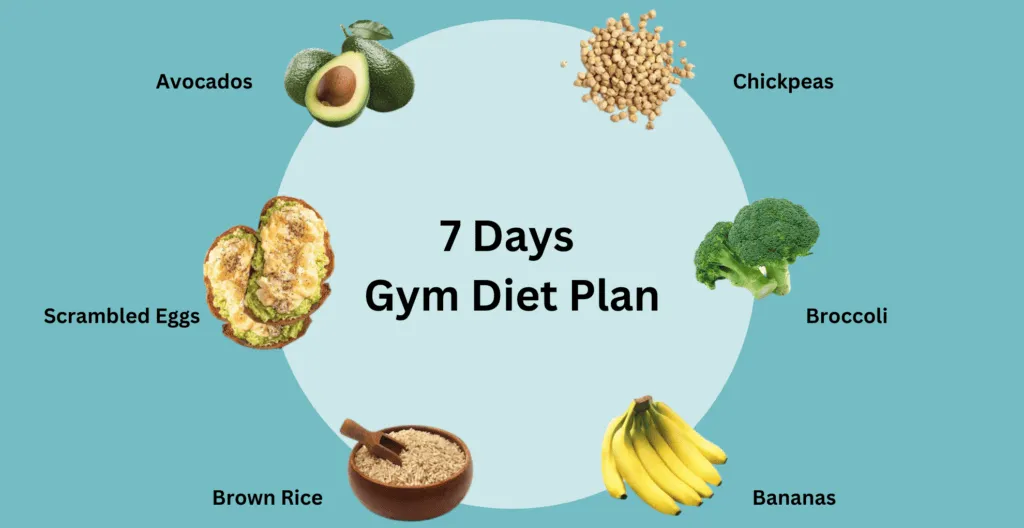
7-Day Calorie Deficit Diet Plan

Here is a 7-day calorie deficit diet plan at 1,600-1,800 calories. Adjust using your calorie deficit calculator results. If you are a 6'4" man, add more. If you are a 5'2" woman, subtract a little. Common sense.
The Daily Template (Copy This)
- Breakfast (400 cal): 3 eggs. Handful of spinach. 1 slice of sourdough.
- Lunch (500 cal): 6 oz chicken breast. Big salad (2 cups greens). 1 tbsp olive oil. Splash of vinegar. Half an avocado.
- Snack (150 cal): Protein shake. Or an apple. Your call.
- Dinner (550 cal): 6 oz lean beef or tofu. 2 cups broccoli. Half a sweet potato.
- Dessert (optional, 100 cal): Sugar-free pudding. Or a handful of berries.
Day-By-Day (So You Don't Lose Your Mind)
- Day 1—High carb: Add half a cup of rice to lunch. Train legs. Feel strong.
- Day 2—Low carb: Remove the sweet potato. Double the broccoli. Feel lean.
- Day 3 – Moderate: Swap beef for salmon. Omega-3s drop inflammation. Your joints thank you.
- Day 4 – Refeed: Eat 2,200 calories. Add a bagel in the morning. This is not cheating. This is biology.
- Day 5 – Low fat: No olive oil. Use cooking spray. Add 4 oz of white fish (cod, tilapia).
- Day 6 – High volume: Double the broccoli again. Halve the carb portion. Feel stuffed on fewer calories.
- Day 7 – Flexible: Eat out. Order a steak. Side of veggies. Skip the bread basket and the butter.
Counter-intuitive but true: You will gain 1-2 lbs on Day 4 (refeed). That is water and glycogen. Not fat. Your muscles are refilling their gas tank. This actually increases your metabolic rate for the following week. Panic not required.
Calorie Deficit Strategies for Women
Let me be direct. Calorie deficit strategies for women are not the same as for men. Not because women are broken. Because the menstrual cycle changes insulin sensitivity, hunger hormones, and even resting calorie burn every single week. Ignore that? You will fail. Work with it? You will feel like a genius.
Eat With Your Cycle, Not Against It
- Follicular phase (Days 1-14): Estrogen rises. Insulin sensitivity is high. Your body handles carbs well. Deficit feels easy. You can push a little harder here.
- Luteal phase (Days 15-28): Progesterone spikes. Insulin sensitivity drops. You crave carbs like a pregnant woman. Here is the kicker—your resting metabolic rate increases 5-10%. You are actually burning more calories at rest.
The strategy that works: Do NOT fight the luteal phase. Add back 150-200 calories. Specifically from complex carbs—buckwheat, quinoa, and oats. If you try to maintain a deep deficit during PMS week, cortisol skyrockets, you will binge on chocolate, and you will call yourself a failure. You are not failing. Your biology is screaming for energy. Listen to it.
Real-world scenario: One of my clients tracked her deficit for six months. She lost zero weight during luteal week. Then lost 2-3 lbs during follicular week. Average over the month? 1 lb per week. If she only weighed herself during PMS week, she would have quit five times.
Technical under-the-hood (important): Iron. Women lose iron during menstruation. Low iron = poor T4 to T3 conversion. Thyroid runs slow. You can be in a perfect deficit and not lose weight because your thyroid is basically asleep. Get your ferritin checked. If it is low, take heme iron. It changes everything.
Your Brain Is the Real Enemy
You have the plan. You have the calorie deficit calculator number. You meal-prepped on Sunday. Then 9 PM hits. You are watching Netflix. You open the peanut butter jar. With a spoon. No bread. Just spoon to jar to mouth. Why?
Because a deficit creates two types of hunger. Homeostatic hunger is a real biological need. Hedonic hunger is pleasure-seeking. 9 PM is almost always hedonic. You are bored. Stressed. Tired.
The "What the Hell" Effect (WTH)
You eat one cookie. 200 calories over your limit. Your brain says, "Well, the day is ruined." Might as well eat the whole sleeve." That is the WTH effect. It is irrational. It is also predictable.
Fix that actually works: Pre-plan a fail-safe. Write it down. "If I go over by 300 calories, I stop. I drink water. I walk for 10 minutes." That is it. The deficit is not blown. You just have a smaller deficit today. A smaller deficit still burns fat. Zero deficit does not.
Hot take that will upset diet culture: "Cheat meals" are stupid. The word "cheat" implies morality. Food is not moral. You are not "good" for eating salad or "bad" for eating pizza. Instead, schedule treats. A 200-calorie dark chocolate square every single day is better than a 2,000-calorie Sunday binge. Consistency over perfection. Say it out loud.
Final Word
Here is the truth that no SEO article wants to say because it is not sexy. Calorie deficit strategies fail because people chase perfect. Perfect is a myth. Perfect is the enemy of done.
If you hit your deficit 80% of the time? You will succeed. The 20% where you eat birthday cake at the office? Or have three beers at a BBQ? That is being human. That is not failure.
Use a calorie deficit calculator as a compass, not a GPS. Track for two weeks. Adjust. Sleep eight hours—did you know sleep deprivation increases ghrelin (hunger hormone) by 15%? Walk more. Lift heavy things twice a week. And for the love of everything, stop panicking when the scale moves up 0.2 lbs overnight. That is water. You did not break the laws of thermodynamics.
FAQ
Q: How do I know my calorie deficit without a calculator?
A: Track everything you eat for 7 days. If your weight does not change, that is your maintenance. Subtract 300. Done.
Q: Can I lose weight in a deficit without exercise?
A: Yes. But 25-30% of the weight lost will be muscle. Muscle loss drops your metabolism. Then you regain fat faster. Lift something.
Q: Why am I not losing weight in a calorie deficit?
A: Three reasons. 1) You are forgetting oils, sauces, and bites. 2) Water retention from salt, your period, or new workouts. 3) Your deficit is too low, and your thyroid adapted. Eat at maintenance for a week.
Q: What is the best calorie deficit for belly fat loss?
A: You cannot spot reduce. A 20-25% deficit plus high protein plus 8 hours of sleep lowers cortisol. Lower cortisol = less belly fat storage.
Q: How fast is too fast for weight loss?
A: More than 1% of your body weight per week (e.g., 2 lbs for a 200 lb person). Faster than that? You lose muscle, risk gallstones, and will rebound. Slow wins.
Q: Do I need to count calories forever?
A: No. Do it strictly for 8 weeks. Train your eye. After that, use your hand: palm of protein, fist of carbs, and thumb of fat. Re-check with a calorie deficit calculator every 10 lbs lost.