A home workout routine for women no equipment uses bodyweight exercises squats, push-ups, lunges, glute bridges, and planks to build strength and burn fat at home, with no gym, no gear, and no cost. Three sessions per week, 25 to 40 minutes each, hitting legs, upper body, and core across the week, produces visible results in four to six weeks.
This guide covers a full body home workout for women, a structured 90 day home workout plan broken into three phases, a free weekly schedule, and lower body circuits all explained clearly and ready to use today.
The Real Reason Most Home Workout Plans Fail Women and How to Fix It
Here's something most fitness articles don't mention: the majority of women who quit their home workout routine don't quit because they lack motivation. They quit because the plan they were following was built for someone else usually someone already reasonably fit, with a spare room, 45 minutes every morning, and no school run to race out for.
I trained women one-to-one for six years before moving to online coaching. The pattern I saw constantly: someone starts a home workout routine for women no equipment, follows it fairly well for two weeks, then misses a few days, feels behind, and quietly stops. Not laziness. A plan that didn't account for a real life.
What I learned from that is the same thing the research keeps confirming: the best no-equipment workout plan for women is the one with enough flexibility to survive a bad week. Short sessions, clear progression, and workouts you can genuinely finish in the time you actually have.
That's what this guide is built around. Every session here runs under 40 minutes. None of them require a specific space, a warm floor, or anything beyond your own bodyweight.
You may also read :- Best Exercises for Fitness and Strength You Can Do at Home
Workout Routine for Women No Equipment Actually Build Strength?
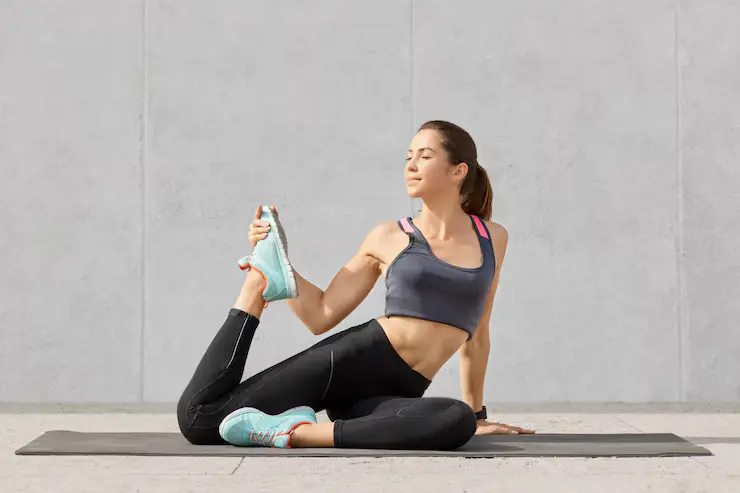
Muscle grows when you apply enough mechanical load to the fibres repeatedly over time. A barbell does that. Your bodyweight does that too as long as the exercise is hard enough and you keep making it harder. A squat where you could do 30 reps without breaking a sweat isn't doing much. A Bulgarian split squat where you're shaking at rep 12 is doing plenty.
A 2022 study in the Journal of Strength and Conditioning Research compared a 10-week bodyweight programme against a matched free weights programme in women aged 18 to 35. Both groups trained three days per week at the same effort level. By week 10, quadriceps strength and lean mass gains were statistically similar between the two groups. The bodyweight group just needed harder exercise variations as they got stronger not heavier weights.
The single biggest mistake I see with women doing bodyweight training at home is staying at the same level too long. They do 15 squats in week one and 15 squats in week twelve and wonder why they've stopped getting results. Harder variations, shorter rest, slower tempo that's where the work lives. - Emma Storey-Gordon, certified S&C coach, Women's Health UK, 2024
Full Body Workout Routine for Women The 30-Minute Circuit
This is a full body workout routine for women that covers every major muscle group in one session. Run it three times per week with at least one rest day between sessions. The whole thing warm-up, main circuit, cool-down fits inside 30 minutes.
Workout Routine for Women No Equipment Complete Session Layout
Warm-up 5 minutes (don't skip this)
- Marching on the spot with high knees: 60 seconds
- Shoulder rolls forward, then backward: 30 seconds each
- Hip circles, both directions: 30 seconds each
- Leg swings front-to-back holding a wall: 10 each leg
- Slow bodyweight squats, very shallow: 15 reps just to get the knees moving
Cold muscles strain more easily. Five minutes here prevents a week on the sofa nursing a pulled hamstring.
Main circuit 3 rounds, 60 seconds rest between rounds
- Squats 15 reps. Feet hip to shoulder-width, toes slightly out, weight stays in the heel. Keep your chest up the moment the chest drops forward, the lower back takes the load instead of the legs.
- Push-ups 10 reps. Hands just outside shoulder-width. Full push-up if you can hold a straight line from head to heel; knee push-up if the hips sag. Half a clean rep beats a full sloppy one.
- Glute bridges 20 reps. Flat on your back, feet planted, knees bent. Push the hips up until shoulders, hips, and knees form one line. Hold that top position for a slow two-count before coming down.
- Reverse lunges 12 reps each leg. Step back instead of forward. Kinder to the knee joint, and the rear leg drives through the glute more than a forward lunge does.
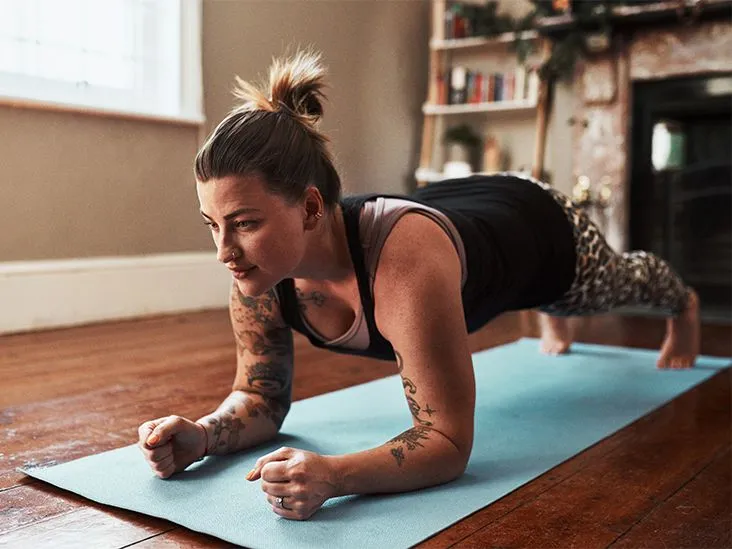
- Forearm plank 30 to 40 seconds. Elbows under shoulders, hips level with the body. If the lower back starts to arch or the hips pike up, drop to your knees don't hold bad positions.
- Mountain climbers 20 reps each leg. Hands on the floor, plank position. Drive one knee toward the chest, return, alternate. Keep the pace steady rather than frantic rushing collapses the posture.
Cool-down 5 minutes
- Lying hamstring stretch, towel optional: 30 seconds per leg
- Child's pose, arms extended: 45 seconds
- Kneeling hip flexor stretch: 30 seconds per side
- Doorframe chest stretch, arms at 90 degrees: 30 seconds
"Women often underestimate how much a proper cool-down affects the next session. You train at 7am, skip the stretch, sit at a desk all day your hips are locked up before the next workout even starts. Five minutes of stretching after training is actually training." Dr. Sarah Shephard, exercise physiologist, Runner's World, January 2025
Free Home Workout Routine for Women Weekly Plan
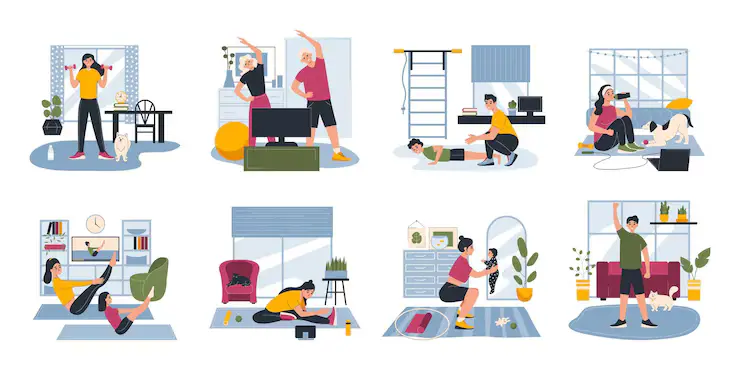
This is the free home workout routine for women no subscription, no app, no equipment. Just a weekly structure you can print out and stick to the fridge.
Beginner-Friendly Schedule: Workout at Home Without Equipment
- Monday Full body circuit (session above). 30 minutes.
- Tuesday Even 15 minutes around the block counts as active recovery and speeds up how quickly the legs feel fresh again.
- Wednesday Lower body session: squats, reverse lunges, glute bridges, side-lying leg raises. 25 minutes.
- Thursday Eat well, sleep well. This is when the adaptation from Monday and Wednesday actually happens.
- Friday Upper body and core: push-ups, tricep dips off a chair, plank holds, dead bugs. 25 minutes.
- Saturday Something you enjoy moving to. A walk, a YouTube yoga video, a bike ride. Not a workout just movement.
- Sunday Full rest. No guilt attached.
Three training sessions per week is the minimum for steady progress. It's also the maximum for a lot of women in the first six weeks and that's fine. The session quality matters far more than frequency in the early stages.
One thing worth saying plainly: missing a session doesn't ruin a week. Missing a whole week doesn't ruin a month. The women who get the best results from home training are the ones who keep coming back, not the ones who never miss a session.
Also read :- How Many Days a Week Should You Work Out for Best Results?
90 Day Home Workout Plan Three Phases, One Clear Direction
A 90 day home workout plan needs a shape a reason why week eight feels different to week two. The three-phase structure below gives you that without requiring you to learn a whole new workout every month.
Phase 1 Weeks 1 to 4: Get the Movements Right
Three sessions per week. Two rounds per circuit. Ninety seconds rest between rounds. The entire focus of this phase is movement quality, not effort. If the squat feels wrong, film yourself and check. If the push-up collapses at rep six, drop to your knees at rep four.
A lot of women come into phase one wanting to push hard and be sore every day. I'd actively discourage that. Soreness in week one is not a sign the workout is working it's a sign your body isn't used to moving this way yet. Channel the energy into form, not fatigue.
Phase 2 Weeks 5 to 8: Add Load Without Adding Equipment
Four sessions per week. Three rounds. Sixty seconds rest. This is where harder exercise variations enter the 90 day home workout plan. Jump squats replace regular squats on two of the four days. Single-leg glute bridges replace the standard two-leg version. Decline push-ups feet on a chair, hands on the floor replace flat push-ups.
By week six or seven, most women using this plan report something specific: stairs feel noticeably easier. That's not a small thing. That's the glutes and quads doing a job they weren't doing before.
Phase 3 Weeks 9 to 12: Slow Down to Go Harder
Four to five sessions per week. Four rounds. Forty-five seconds rest. The main new variable is tempo. Three seconds down on every squat and push-up, pause at the bottom, one second back up. That tempo change makes a bodyweight squat genuinely hard for a trained person. Plank holds go to 60 seconds. Mountain climbers pick up speed.
By week 12, the gap between where someone started and where they are is significant. Not just in what they can do physically the way they move in daily life changes. Posture improves. The back of the upper arm stops being a worry. Going up stairs with shopping bags stops being a thing.
Measurable Progress Targets Across the 90 Days
- Week 1: 10 controlled squats, 5 push-ups (knee or full), 20-second plank
- Week 4: 15 squats, 8 push-ups, 35-second plank two rounds without stopping
- Week 8: 15 jump squats, 10 push-ups, 50-second plank three rounds
- Week 12: 20 slow-tempo squats, 15 push-ups, 60-second plank four rounds
Lower Body Workout for Women Glutes and Legs Without a Single Weight
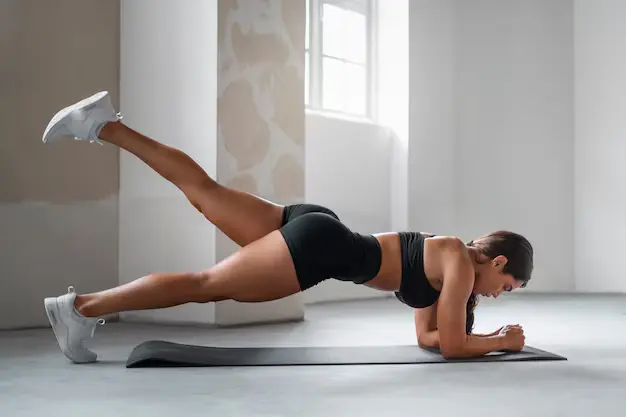
The lower body responds faster to training than any other area partly because the muscles are larger, partly because women tend to have more slow-twitch muscle fibre in the glutes and hamstrings that responds well to volume and time under tension.
These five exercises form a standalone lower body home workout for women that takes 20 to 25 minutes. Run them as a circuit: 15 reps per exercise, three rounds, 45 seconds rest between rounds.
Best Bodyweight Lower Body Exercises for a Home Workout Routine
- Sumo squats feet wider than hip-width, toes pointing out at 45 degrees. The wider stance shifts the work from the front of the thigh to the inner thigh and glute. Go slow on the way down.
- Bulgarian split squats rear foot on a chair, front foot forward. The hardest single-leg exercise on this list. If the balance feels unstable, start with the back foot on something lower. The instability is part of why this works.
- Hip thrusts off the sofa upper back against the seat cushion, feet flat on the floor, drive the hips up. The increased range of motion compared to a floor glute bridge means more glute activation at the top.
- Side-lying hip abductions lie on your side, top leg straight, lift slowly to about 45 degrees and lower with control. Targets the gluteus medius the muscle responsible for the shape of the outer hip that most standard squats miss entirely.
- Curtsy lunges step one leg behind and across the other, like a curtsy. Hits the glute-hamstring connection and improves hip stability in a way standard forward lunges don't reach.
That circuit done three times per week as part of the broader plan is genuinely more targeted than what most women do with a pair of light dumbbells in a gym.
Eating Around Your Workouts What Actually Makes a Difference
This isn't a diet article, and this section isn't going to tell you to track every calorie. But training without paying any attention to food is like training with one hand behind your back the effort is there, the results are slower than they need to be.
Three things make a measurable difference:
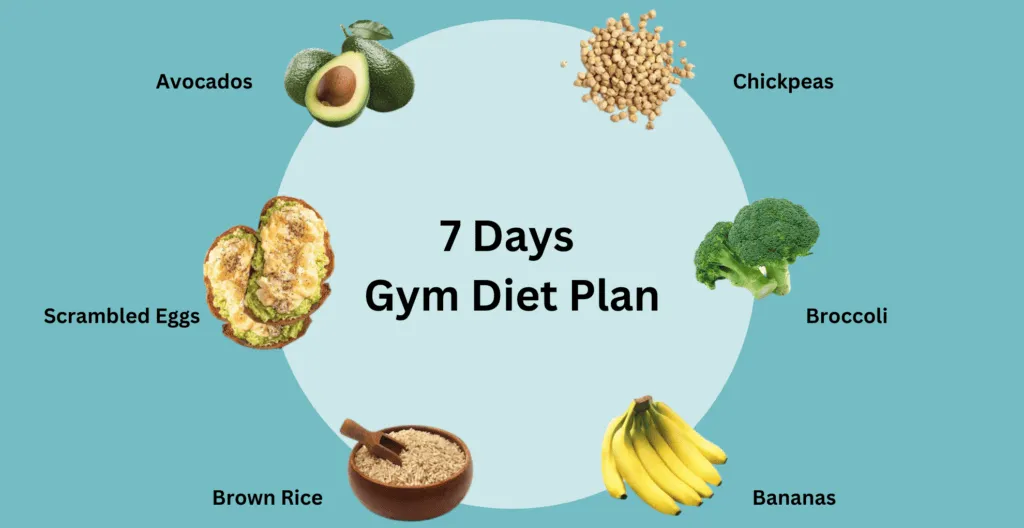
Protein quantity. Muscle repair after a training session needs protein. The current evidence puts the useful range at roughly 1.6 to 2.2 grams of protein per kilogram of bodyweight per day for women doing resistance training. For a 65kg woman, that's around 105 to 143 grams achievable across three meals without needing supplements. Eggs, chicken thighs, Greek yoghurt, cottage cheese, lentils, and edamame all count.
Eating before longer sessions. If a session is over 25 minutes, a small amount of carbohydrate 30 to 45 minutes beforehand a banana, a slice of toast, a small bowl of oats means the session runs at better quality. Training fasted at moderate-to-high intensity tends to produce worse output and more muscle breakdown.
Not cutting food on rest days. This is the one most women get wrong. Rest days are when the body repairs and rebuilds from training. Slashing calories on the days you don't train because you 'didn't earn' food slows that repair process and increases fatigue heading into the next session.
FAQs Home Workout Routine for Women No Equipment
How many days a week should a woman work out at home without equipment?
Three days per week is the right starting point for most women. That's enough frequency to drive adaptation the physiological changes that build strength and improve body composition while leaving enough recovery between sessions. Going to four days works well after the first four to six weeks once the body has adjusted. Every day without rest days doesn't produce faster results; it usually produces slower ones because recovery gets compromised.
How long before a home workout routine for women no equipment shows results?
The first changes most women notice aren't visible ones they're functional. Around week three, the workouts stop feeling quite as hard. Energy levels in the afternoon stop dipping as sharply. Around week five or six, clothes start fitting differently. Clear visual changes more defined legs, arms that feel firmer tend to show between weeks six and eight. By week 12 of a 90 day home workout plan, the cumulative effect is significant.
Can bodyweight training at home replace the gym entirely?
For most women's goals fat loss, improved muscle tone, better strength for daily life, posture, energy yes. The gym offers heavier loading options that become relevant for serious strength athletes or competitive bodybuilders. For the majority of women wanting to feel fitter, stronger, and healthier, a well-structured bodyweight home workout routine covers everything needed without the membership fee or the commute.
What's the best beginner home workout for women with no equipment?
Start with three exercises and nothing else: squats, push-ups (knee variation if needed), and glute bridges. Three sets of each, three days per week, for the first four weeks. The temptation is to do more from the start more exercises, more days, longer sessions. Resist it. Learning to move well in three patterns gives you the foundation every other exercise in this guide builds on.
Do you need to warm up before a bodyweight home workout?
Yes and five minutes is enough. Muscles that haven't been warmed up are less pliable, joints move through a shorter range, and the nervous system takes longer to fire at full capacity. Skipping the warm-up doesn't save five minutes; it often costs several days when a minor strain turns into something that needs rest. March on the spot, move the shoulders and hips through their full range, do a few shallow squats slowly. That's genuinely all it takes.
Where to Start One Session, This Week
Every woman reading this is at a different point. Some haven't trained in two years. Some trained hard six months ago and fell out of the habit. Some are starting fresh with no fitness background at all.
The entry point is the same for all of them: the 30-minute circuit in this guide, done once this week. Not perfectly. Not at maximum effort. Just done.
The home workout routine for women no equipment outlined here doesn't require optimal conditions. It doesn't need a spare room, a yoga mat, or 45 free minutes every morning. It needs a patch of floor and something like 30 minutes, three times a week.
That's a low bar by design. The 90-day plan raises it progressively. But right now, the only thing that matters is the first session.