If you are new to exercise, the honest answer is that you do not need a long list of movements to get results. Most beginners do best with two to three exercises per workout when they are first learning, and they can build up to three to five exercises as they become more comfortable and consistent . The exact number matters less than choosing a small number of movements you can perform well, repeat each week, and How many exercises per workout for beginners.
Why Fewer Exercises Are Better When You Start?
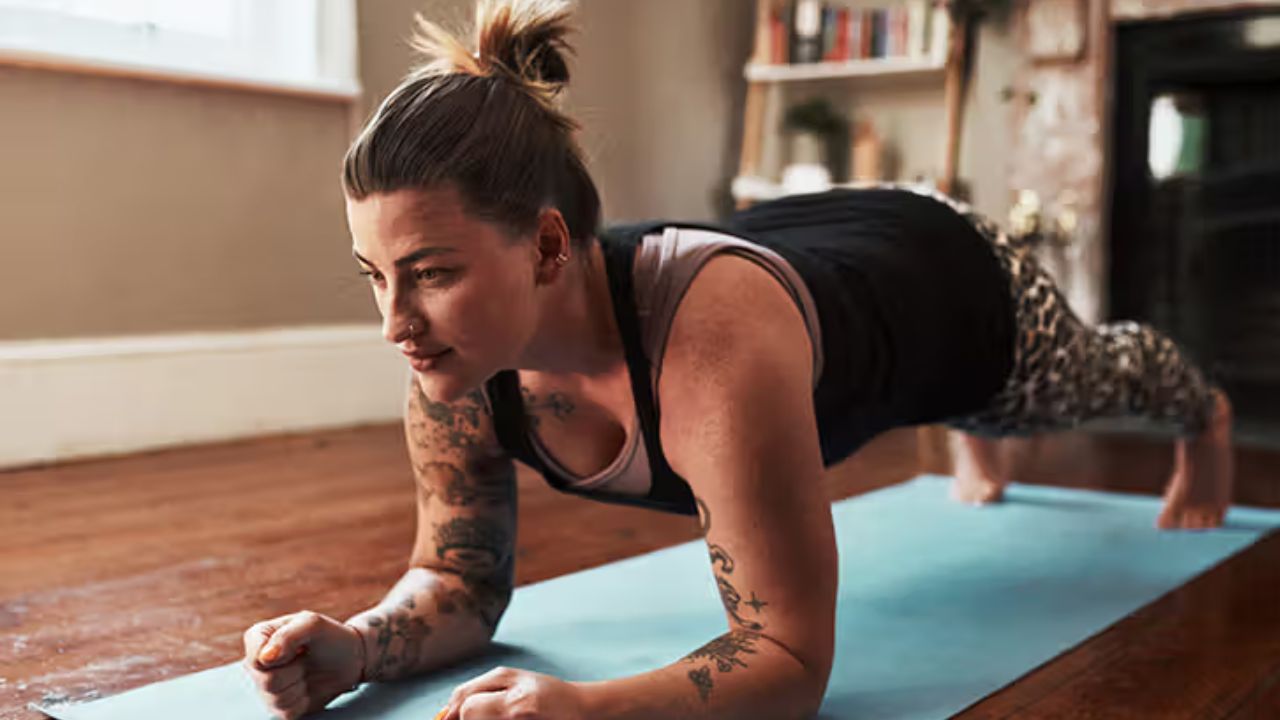
When you are new, your body is learning how to move under resistance. Your muscles are not the only thing adapting. Your joints, tendons, and nervous system are also figuring out how to work together. Doing too many exercises in one session can make it hard to pay attention to your form on any single movement. You may finish the workout feeling tired, but you may not have given your body enough clean repetitions to actually learn the pattern.
Eric Sung, a certified strength and conditioning coach in New York, tells beginners to start with two or three exercises per workout on the low end . That small number gives you room to focus. You can think about your breathing, your posture, and the path of the movement without rushing to the next machine. If you can only do two exercises and do them well, that is a better use of your time than forcing yourself through six movements with sloppy form.
There is also a practical reason to keep the number low. Beginners often miss workouts because the plan feels too big. A workout with three exercises feels doable. A workout with eight exercises can feel like a chore before you even start. Building the habit matters more than checking off a long list.
Read Also: Best Simple Daily Workout Routine at Home for Beginners (Step-by-Step)
The Three to Five Rule for Beginners
Once you have a few weeks of consistent training behind you, the common guidance is to do three to five exercises per workout . This range gives you enough work to stimulate your muscles without overwhelming your recovery. It also fits into a normal schedule. Most people can finish three to five exercises with proper rest in about forty-five minutes to an hour.
A simple way to think about it is to cover the basic patterns your body is built to do. You want a movement where you push something away from you. You want a movement where you pull something toward you. You want a movement where you squat down and stand back up. You want a movement where you bend at the hips. And you want something that challenges your core or carries. If you pick one exercise from a few of these categories, you will naturally land in the three to five range without needing to count.
For example, a beginner workout might include a squat, a push-up or chest press, and a row. That is three exercises. It covers your legs, your chest and shoulders, and your back. If you have energy and time, you could add a hip hinge movement like a light deadlift and a core exercise like a plank. That brings you to five. You do not need to do more than that to make progress in the early months.
What About Doing More Exercises Per Muscle Group?
You may see advice about doing two or three exercises per muscle group . That advice is usually meant for people who are splitting their training by body part, such as a day for upper body and a day for lower body. For a beginner doing full-body workouts, the total number of exercises across the whole session is what matters most. If you are doing a full-body workout three times a week, you do not need to pile on multiple exercises for every single muscle. Your squat works your quads and glutes. Your row works your back and biceps. Those movements already cover a lot of ground.
The idea of doing many exercises for one muscle group becomes more relevant later, when you are stronger and need more volume to keep progressing. As a beginner, your body responds well to less. Doing two or three focused exercises for a muscle group in one session is plenty, and doing more can cut into your recovery without giving you extra benefit .
A Sample Beginner Workout You Can Use
Here is a simple session that follows the beginner range. It has three exercises, so it fits the low end of the recommendation. You can do this workout two or three times a week on non-consecutive days.
Goblet Squat – Hold one dumbbell close to your chest. Stand with your feet about shoulder-width apart. Sit your hips down and back as if you are lowering yourself onto a chair. Keep your chest up and your heels on the floor. Stand back up by pushing through your whole foot. Do two to three sets of eight to twelve repetitions.
Incline Push-Up – Place your hands on a sturdy bench, a counter, or a step. The higher the surface, the easier the movement. Keep your body in a straight line from your head to your heels. Lower your chest toward the surface by bending your elbows, then push yourself back up. Do two to three sets of six to twelve repetitions. If this feels too hard, stand facing a wall and do wall push-ups instead.
One-Arm Dumbbell Row – Place one hand and one knee on a bench so your back is flat. Hold a dumbbell in your other hand with your arm hanging straight down. Pull the dumbbell toward your hip by bending your elbow and squeezing your shoulder blade toward your spine. Lower it back down with control. Do two to three sets of eight to twelve repetitions on each side.
This workout has three exercises. It covers your legs, your pushing muscles, and your pulling muscles. You can do it in less than thirty minutes once you know the movements. When this feels easy and you are recovering well, you can add a fourth exercise, such as a hip hinge like a Romanian deadlift with light dumbbells, or a core exercise like a dead bug.
You May Also Like: 6 Day Gym Workout Schedule for Muscle Gain and Strength
How to Know When to Add an Exercise?
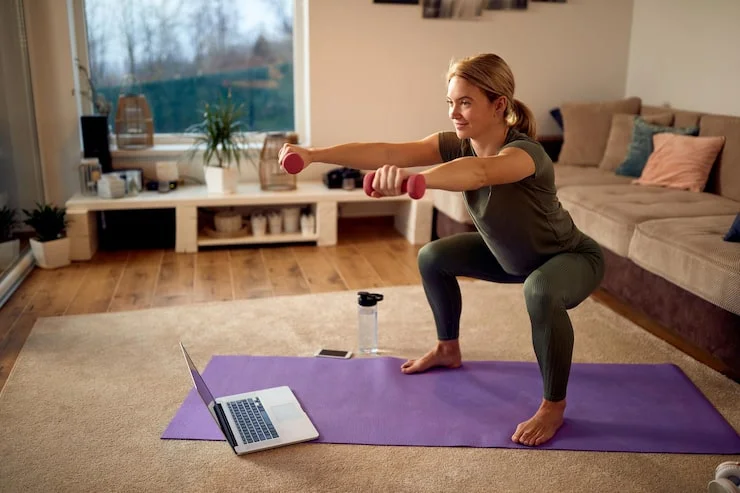
You are ready to add a fourth or fifth exercise when a few things are true. You have been doing your current workout consistently for at least four to six weeks. You are not feeling completely drained after your sessions. Your form feels steady on every repetition. And you are still able to add a small amount of weight or a repetition to your exercises from week to week.
If you are not sure, wait. There is no prize for adding exercises faster. The beginner who does three exercises for three months will often make better progress than the beginner who jumps to six exercises in the first two weeks and then burns out or gets hurt.
You can also add difficulty in other ways besides adding a new exercise. You can add a set to an exercise you already do. You can slow down the lowering phase of a movement so your muscles work longer. You can add a small amount of weight. These changes are often more useful for beginners than simply doing more movements .
Conclusion
For beginners, two to three exercises per workout is a strong starting point . As you build consistency and confidence, you can move toward three to five exercises . Pick movements that cover the basic patterns of squatting, pushing, pulling, and bending. Do them with care. Write down what you do so you can see your progress. And remember that the goal in the beginning is not to do the most. The goal is to do enough to get stronger, learn your body, and come back for the next session.